
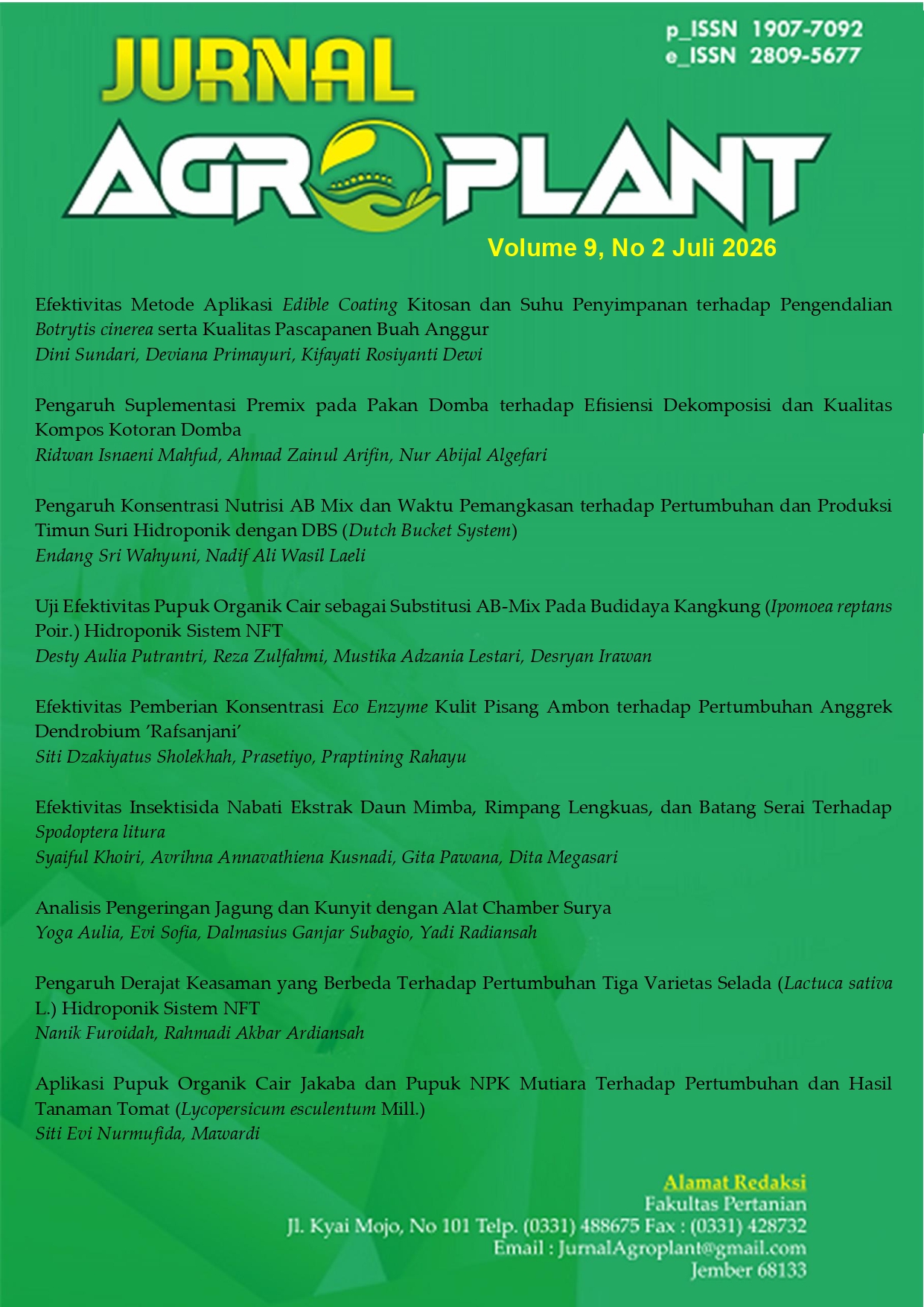
Efektivitas Insektisida Nabati Ekstrak Daun Mimba, Rimpang Lengkuas, dan Batang Serai Terhadap Spodoptera litura
DOI:
https://doi.org/10.56013/agr.v9i2.6154Keywords:
Armyworm, Botanical Extract, Integrated Pest Management, Larval Mortality, PesticideAbstract
Spodoptera litura is a major pest of horticultural crops that can significantly reduce crop yields and cause substantial economic losses to farmers. Botanical insecticides have emerged as an environmentally friendly alternative for pest management, helping to minimize the adverse effects associated with synthetic pesticides. Several plant species, including neem (Azadirachta indica), galangal (Alpinia galanga), and lemongrass (Cymbopogon citratus), contain bioactive compounds with antifeedant and antibiosis properties against insect pests. However, information regarding the optimal concentrations and combinations of these botanical insecticides remains limited. This study aimed to evaluate the effectiveness of different concentrations and combinations of botanical insecticides derived from neem leaf, galangal rhizome, and lemongrass stem extracts against the mortality of S. litura larvae. Plant extracts were prepared using water-based maceration, and efficacy tests were conducted through a spraying method. Observed parameters included larval mortality and feeding inhibition effects. Mortality data were analyzed using probit analysis to determine lethal concentration (LC) and lethal time (LT) values. The results showed that both the combined extract treatment and neem leaf extract alone at a concentration of 12.5% caused the highest larval mortality, reaching 100%. The combined extract treatment exhibited LC₅₀ and LC₉₀ values of 1.581% and 7.883%, respectively, while LT₅₀ and LT₉₀ values were 2.01 and 4.31 days, respectively. These findings indicate that increasing extract concentration enhanced its toxic effects on S. litura larvae. This study demonstrates the potential of botanical insecticides as sustainable and eco-friendly pest management tools, reducing dependence on synthetic insecticides and supporting the implementation of integrated pest management strategies for sustainable agriculture.
Downloads
Published
How to Cite
Issue
Section
License
Copyright (c) 2026 Syaiful Khoiri, Avrihna Annavathiena Kusnadi, Gita Pawana, Dita Megasari

This work is licensed under a Creative Commons Attribution-NoDerivatives 4.0 International License.