Ekspansi Kelapa Sawit terhadap Ekologi Orangutan: Perubahan Perilaku, Penggunaan Habitat, dan Konflik Manusia–Orangutan
Keywords:
Deforestasi, Perubahan Habitat, Konversi Lahan, Kelapa Sawit, Orang UtanAbstract
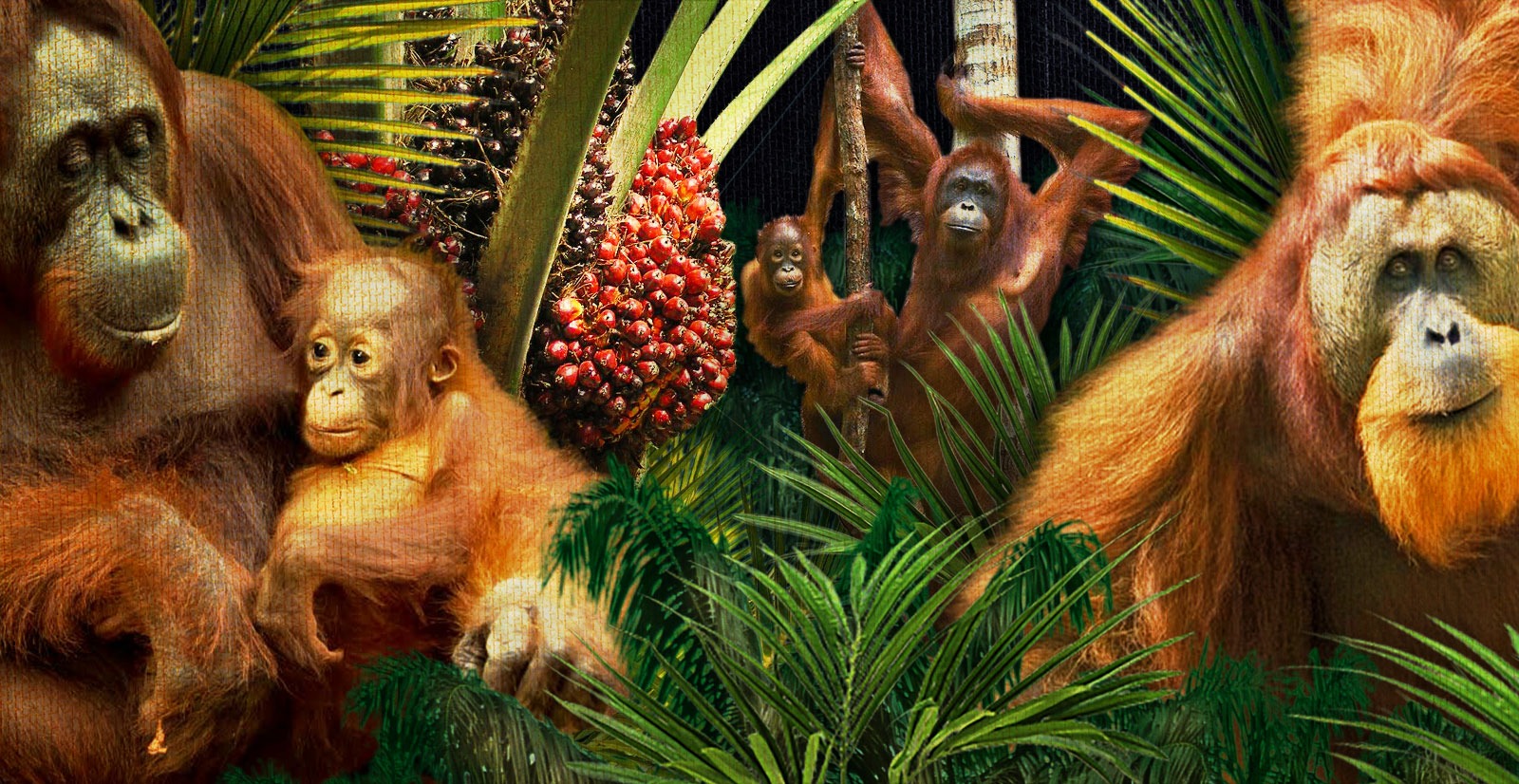
Ekspansi perkebunan kelapa sawit telah menjadi salah satu pendorong utama perubahan lanskap hutan tropis, yang berdampak langsung pada kelangsungan hidup orangutan. Penelitian ini bertujuan untuk mengkaji bagaimana deforestasi dan fragmentasi habitat memengaruhi kualitas habitat, adaptasi perilaku, serta interaksi antara manusia dan orangutan. Melalui tinjauan literatur terhadap berbagai studi ilmiah, ditemukan bahwa konversi hutan menjadi perkebunan menyebabkan penurunan ketersediaan pakan dan ruang jelajah, sehingga memaksa orangutan beradaptasi pada habitat terdegradasi. Adaptasi ini meningkatkan frekuensi perjumpaan dengan manusia, yang sering kali berujung pada konflik, kerugian ekonomi, hingga ancaman terhadap keselamatan kedua pihak. Meskipun beberapa individu menunjukkan kemampuan bertahan di lanskap yang terfragmentasi, kondisi tersebut tidak menjamin keberlanjutan populasi dalam jangka panjang. Temuan ini menegaskan pentingnya pengelolaan lanskap yang berkelanjutan dan strategi konservasi yang mempertimbangkan keseimbangan antara kebutuhan manusia dan perlindungan satwa liar.
References
Adzan, G., Djohan, T. S., & Imron, M. A. (2024). Future Risk and Its Impact on Orangutan Habitat in Katingan-Kahayan Corridor, Central Kalimantan. International Journal of Conservation Science, 15(2), 1009–1020. https://doi.org/10. 36868/IJCS.2024.02.17
Ancrenaz, M, Gumal, M., Marshall, A. J., Meijaard, E., Wich, S., & Husson, S. (2024). Pongo Pygmaeus, Bornean Orangutan (Vol. 8235). https://dx.doi.org/10.2305/IUCN.UK.2024-1.RLTS.T17975A259043172.en
Ancrenaz, Marc, Meijaard, E., Wich, S., & Simery, J. (2016). PALM OIL PARADOX Sustainable Solutions to Save Great Apes.
Ancrenaz, Marc, Oram, F., Ambu, L., Lackman, I., Ahmad, E., Elahan, Hamisah, Kler, H., Abram, N., & Meijaard, E. (2014). Of Pongo , palms and perceptions: a multidisciplinary assessment of Bornean orang-utans Pongo pygmaeus in an oil palm context. Fauna & Flora International, 49(3), 465–472. https://doi.org/10.1017/S0030605313001270
Ashbury, A. M., Willems, E. P., Utami Atmoko, S. S., Saputra, F., van Schaik, C. P., & van Noordwijk, M. A. (2020). Home range establishment and the mechanisms of philopatry among female Bornean orangutans (Pongo pygmaeus wurmbii) at Tuanan. Behavioral Ecology and Sociobiology, 74. https://doi.org/10.1007/s00265-020-2818-1
Cahyani, E. N., Zitunah, A., & Patana, P. (2014). Identifikasi dan Pemetaan Pohon Sarang Orangutan Sumatera (Pongo abelii) di Kawasan Penyangga Cagar Alam Dolok Sibual-buali (Studi Kasus : Desa Bulu Mario, Aek Nabara dan Huraba).
Campbell-smith, G., Campbell-smith, M., Singleton, I., & Linkie, M. (2011). Raiders of the Lost Bark : Orangutan Foraging Strategies in a Degraded Landscape. PLoS ONE, 6(6). https://doi.org/10.1371/journal.pone.0020962
Chua, L., Fair, H., Schreer, V., Epie, A. S. T., & Thung, P. H. (2021). University of Cambridge. Journal of The American Ethnological Society, 48(4), 370–385. https://doi.org/10.1111/amet.13045
Desantoro, T. G., Prasetyo, L. B., Lubis, M. I., & Fandy, M. (2025). Distribution and types of negative human-orangutan interactions in Kalimantan based on news articles. BIO Web of Conference, 00013. https://doi.org//10.1051/bioconf/202516200013
Fiorenza, L., Mitchell, D. R., & Kullmer, O. (2024). Pongo’s ecological diversity from dental macrowear analysis. American Journal of Biological Anthropology, June, 1–14. https://doi.org/10.1002/ajpa.25031
Freund, C., Rahman, E., & Knott, C. (2017). Ten years of orangutan-related wildlife crime investigation in West Kalimantan, Indonesia. American Journal of Primatology, 79(11), 22620. https://doi.org/https://doi.org/10.1002/ajp.22620
Hill, C. M., & Wallace, G. E. (2012). Crop protection and conflict mitigation: reducing the costs of living alongside non- human primates. Biodiversity and Conservation, 21(10), 2569–2587. https://doi.org/10.1007/s10531-012-0318-y
Jonas, H., Abram, N. K., & Ancrenaz, M. (2017). Addressing the impact of large-scale oil palm plantations on orangutan conservation in Borneo A spatial , legal and political economy analysis (First Edit). International Institute for Environtment and Development (IIED).
Kuswanda, W. (2017). Kriteria Penilaian Cepat Kesesuaian Habitat Untuk Lokasi Pelepasliaran Orangutan Sumatera (Pongo abelii Lesson): Taman Nasional Bukit Tigapuluh. Policy Brief, 11(05).
Kwatrina, R. T. R. I., Santosa, Y., Bismark, M., & Santoso, N. (2018). The impacts of oil palm plantation establishment on the habitat type , species diversity , and feeding guild of mammals and herpetofauna. Biodiversitas, 19(4), 1213–1219. https://doi.org/10.13057/biodiv/d190405
Meijaard, E, Dennis, R. ., Ni’matullah, S., Ancrenaz, M., Wich, S. ., & Sherman, J. (2023). Tapanuli Orangutan ( Pongo tapanuliensis ) Methods for 2023 update of IUCN Red List orangutan (Pongo spp.) ranges.
Meijaard, Erik, Albar, G., Nardiyono, Rayadin, Y., Ancrenaz, M., & Spehar, S. (2010). Unexpected Ecological Resilience in Bornean Orangutans and Implications for Pulp and Paper Plantation Management. PLoS ONE, 5(9), 1–7. https://doi.org/10.1371/journal.pone.0012813
Meijaard, Erik, Welsh, A., Ancrenaz, M., Wich, S., Nijman, V., & Marshall, A. J. (2010). Declining Orangutan Encounter Rates from Wallace to the Present Suggest the Species Was Once More Abundant. PLoS ONE, 5(8). https://doi.org/10.1371/journal.pone.0012042
Noordwijk, M. A. Van, Utami Atmoko, S. S., Knott, C. D., Kuze, N., Morrogh-Bernard, H. C., Oram, F., Schuppli, C., van Schaik, C. P., & Willems, E. P. (2018). The slow ape: High infant survival and long interbirth intervals in wild orangutans. Journal of Human Evolution, 125, 38–49. https://doi.org/10.1016/j.jhevol.2018.09.004
Oram, F., Daisah, M., Abdul, K., & Saharon, R. (2022). “Engaging the Enemy”: Orangutan (Pongo pygmaeus morio) Conservation in Human Modified Environments in the Kinabatangan floodplain of Sabah , Malaysian Borneo. International Journal of Primatology, 43, 1067–1094. https://doi.org/10.1007/s10764-022-00288-w
Prasetyo, D., & Basalamah, F. (2021). Do Orangutans Have Digestion Problems After Eating Oil Palm Fruit ? A Review. Journal of Tropical Biodiversity, 1(3), 139–148.
Santika, T., Ancrenaz, M., Wilson, K. A., Spehar, S., Abram, N., Banes, G. L., Ca, G., Curran, L., Arcy, L., & Roberto, A. (2017). First integrative trend analysis for a great ape species in Borneo. Scientific Reports, 7(4839), 1–16. https://doi.org/10.1038/s41598-017-04435-9
Santosa, Y., Krisdijantoro, A., Thohari, M., & Rahman, D. A. (2011). ANALISIS POLA PENGGUNAAN RUANG DAN WAKTU ORANGUTAN (Pongo pygmaeus pygmaeus Linneaus, 1760) DI HUTAN MENTOKO TAMAN NASIONAL KUTAI, KALIMANTAN TIMUR. Penelitian Hutan Dan Konservasi Alam, 8(2).
Seaman, D. J. I., Swinfield, T., Struebig, M. J., Bernard, H., Coomes, D., & Milodowski, D. T. (2019). Densities of Bornean orang ‐ utans ( Pongo pygmaeus morio ) in heavily degraded forest and oil palm plantations in Sabah , Borneo. Journal of Primatology, December 2018. https://doi.org/10.1002/ajp.23030
Sherman, J., Ancrenaz, M., Voigt, M., Oram, F., Santika, T., Wich, S., & Meijaard, E. (2020). Envisioning a future for Bornean orangutans : Conservation impacts of action plan implementation and recommendations for improved population outcomes. Biodiversitas, 21(2), 465–477. https://doi.org/10.13057/biodiv/d210206
Sherman, J., Voigt, M., Ancrenaz, M., Meijaard, E., & Oram, F. (2025). Outcomes of orangutan wild-to-wild translocations reveal conservation and welfare risks. PLoS ONE, 1–26. https://doi.org/10.1371/journal.pone.0317862
Simanihuruk, R. M. S. (2025). Karakteristik dan Kerapatan Sarang Orang Utan Sumatera (Pongo abelii) pada Habitat Terisolasi di Kecamatan Batang Serangan, Langkat, Sumatera Utara. BIO-CONS: Jurnal Biologi Dan Konservasi, 7(1). https://doi.org/https://doi.org/10.31537/biocons.v7i1.2293 KARAKTERISTIK
Spehar, S. N., & Rayadin, Y. (2017). Habitat use of Bornean Orangutans ( Pongo pygmaeus morio ) in an Industrial Forestry Plantation in East Kalimantan , Indonesia. International Journal of Primatology, 38, 358–384. https://doi.org/10.1007/s10764-017-9959-8
Spehar, S. N., Sheil, D., Harrison, T., Louys, J., Ancrenaz, M., Marshall, A. J., Wich, S. A., Bruford, M. W., & Meijaard, E. (2018). Orangutans venture out of the rainforest and into the Anthropocene. Science Advance, 4(June), 1–14.
Voigt, M., Kühl, H. S., Ancrenaz, M., Gaveau, D., Meijaard, E., Santika, T., Sherman, J., Wich, S. A., Wolf, F., Struebig, M. J., Pereira, H. M., & Rosa, I. M. D. (2022). Deforestation projections imply range-wide population decline for critically endangered Bornean orangutan. Perspectives in Ecology and Conservation, 20(3), 240–248. https://doi.org/https://doi.org/10.1016/j.pecon.2022.06.001
Voigt, M., Wich, S. A., Ancrenaz, M., Wells, J., Wilson, K. A., & Ku, H. S. (2018). Global
Downloads
Published
How to Cite
Issue
Section
License
Copyright (c) 2026 Himmatul Husna, Setyadi Ari Murtopo, Sonny Kristianto

This work is licensed under a Creative Commons Attribution 4.0 International License.